
Sex Addiction Therapy in California
Jeremy Larson, LMFT, LPCC, CSAT
Specialized Sex Addiction Therapy in California
Sexual behavior can become confusing and distressing when it begins to feel difficult to control.
You may have promised yourself—or someone you love—that you would stop. You may have deleted apps, installed filters, changed routines, or tried to rely on willpower, only to eventually find yourself returning to the same behaviors.
For some people, the cycle includes secrecy, shame, pornography, masturbation, affairs, hookups, sexual messaging, fantasy, or other sexual behaviors that have begun interfering with relationships, work, emotional well-being, or personal values.
If this sounds familiar, you don't have to figure it out alone.
I am Jeremy Larson, LMFT, LPCC, CSAT, a Certified Sex Addiction Therapist providing specialized therapy for adults struggling with problematic or compulsive sexual behavior.
My goal is not simply to help you stop a behavior. Therapy can help you understand why the pattern keeps happening, what maintains it, and what needs to change for recovery to become sustainable.


When Sexual Behavior Starts to Feel Out of Control
Having sexual thoughts, desires, or a strong sex drive does not automatically mean someone has a sexual addiction.
The concern is often less about how frequently someone thinks about or engages in sex and more about their relationship with the behavior and its consequences.
You may benefit from exploring your sexual behavior if you:
Repeatedly engage in sexual behaviors longer or more often than intended
Have tried unsuccessfully to stop or reduce certain behaviors
Feel unable to control urges despite genuinely wanting to change
Hide, minimize, or lie about sexual behavior
Continue despite relationship, emotional, financial, occupational, or other consequences
Use sexual behavior to escape stress, anxiety, loneliness, boredom, anger, shame, or other uncomfortable emotions
Experience cycles of acting out followed by guilt, shame, or regret
Find that behaviors or fantasies have escalated over time
Feel increasingly disconnected from partnered intimacy
Have damaged trust in an important relationship
Spend significant amounts of time thinking about, planning, engaging in, or recovering from sexual behavior
Feel as though sexuality has become something that controls you rather than an area of life in which you are making intentional choices
You do not need to decide whether you are a “sex addict” before beginning therapy.
Assessment can help us understand your specific pattern, its impact on your life, and what kind of treatment may be appropriate.
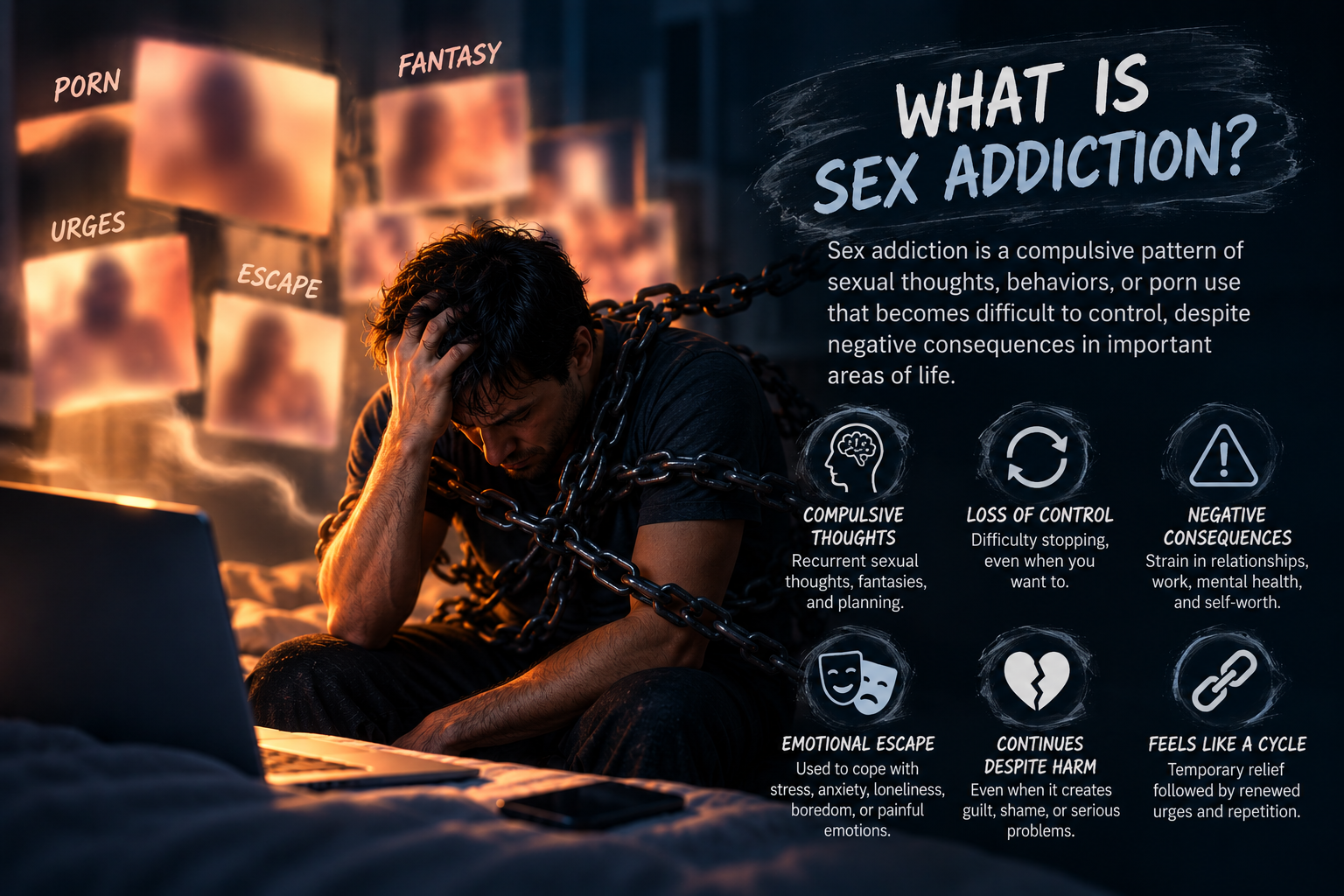
What Is Sex Addiction?
The term sex addiction is commonly used to describe persistent patterns of sexual behavior that feel difficult to control and continue despite significant distress or negative consequences.
People sometimes become focused on the label itself:
“Am I really a sex addict?”
That can be an important question, but therapy also looks at what is actually happening in your life.
We may explore questions such as:
Do you feel in control of your sexual choices?
Have you repeatedly tried to change without lasting success?
What happens emotionally before you act out?
What needs are you attempting to meet through sexual behavior?
What consequences has the pattern created?
What happens when you try to stop?
How has the behavior affected intimacy, honesty, relationships, and the way you feel about yourself?
Understanding the pattern is often more useful than simply applying a label.
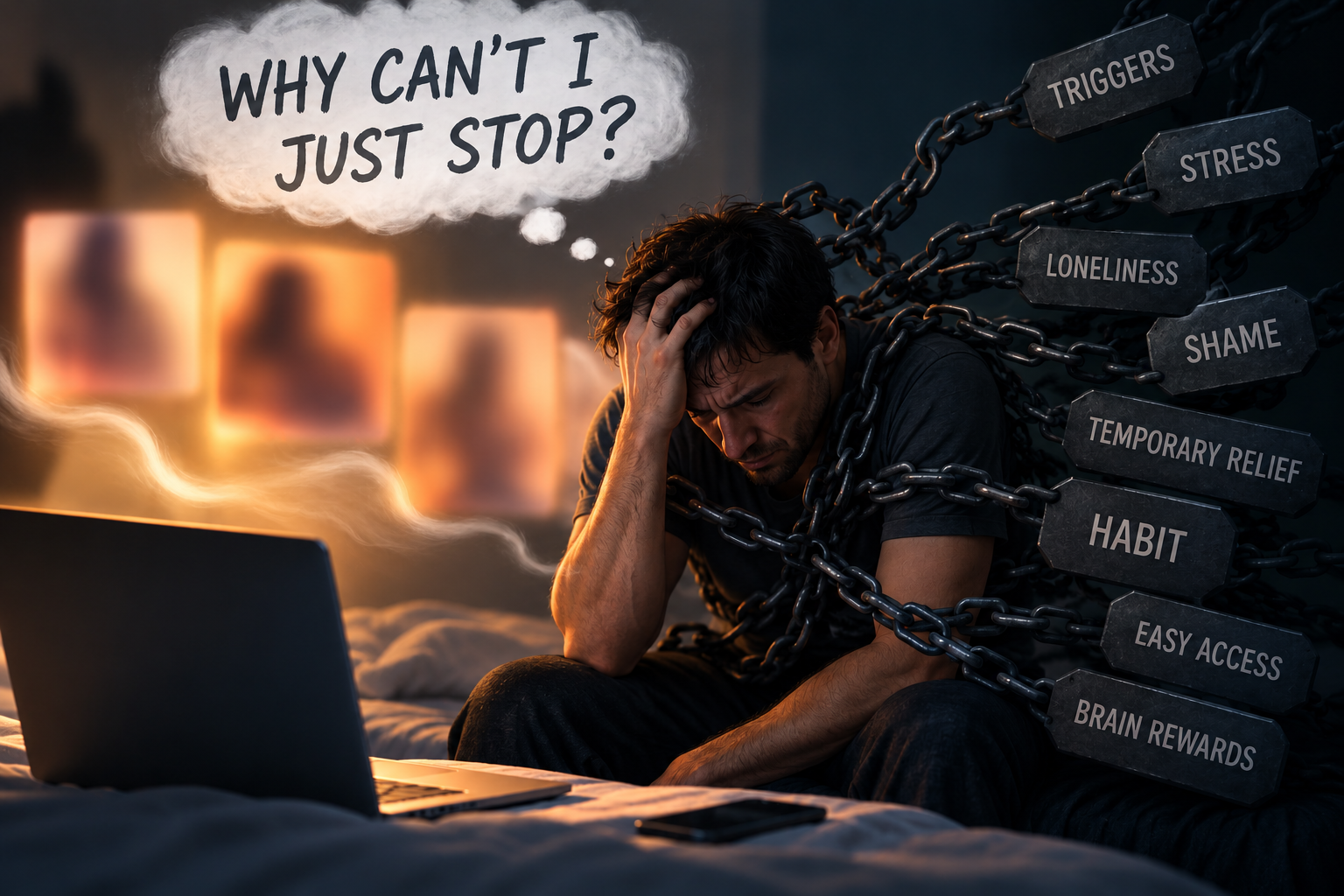
Why Can't I Just Stop?
Many clients come into therapy frustrated because they already know the behavior is causing problems.
They don't need someone simply telling them to stop.
They have often already tried.
The more useful question becomes:
“Why do I keep returning to something that I genuinely don't want to keep doing?”
Sexual behavior can become connected to emotional regulation, attachment, stress relief, avoidance, validation, loneliness, shame, excitement, habit, fantasy, and learned patterns of coping.
This doesn't excuse harmful behavior or eliminate personal responsibility.
It does help us understand what needs to change.
Recovery requires accountability and curiosity.
If treatment only removes the behavior without addressing what the behavior has been doing for you emotionally, you may find yourself relying primarily on willpower or what many people describe as white-knuckling recovery.
The goal is to develop something more sustainable.
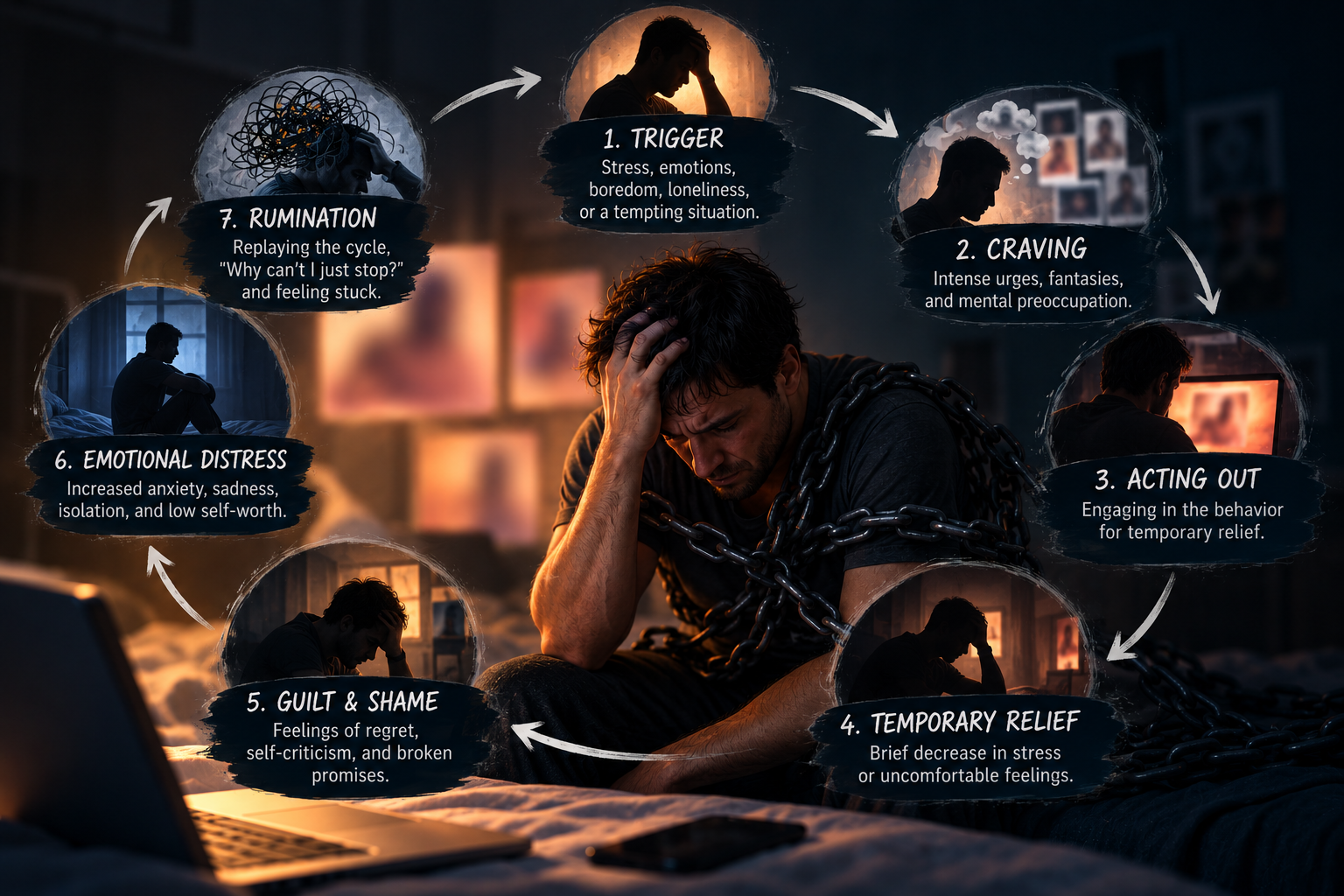
The Cycle of Compulsive Sexual Behavior
Problematic sexual behavior often does not occur randomly.
Over time, a cycle can develop.
A person may experience stress, loneliness, resentment, rejection, boredom, anxiety, shame, conflict, or another uncomfortable internal state.
Sexual fantasy or behavior then provides temporary stimulation, escape, comfort, validation, excitement, or emotional relief.
That relief may be followed by guilt, secrecy, regret, relationship conflict, or renewed promises to stop.
Eventually another trigger occurs and the cycle begins again.
Therapy can help slow this process down enough to understand:
Trigger → Emotional State → Fantasy/Preoccupation → Urge → Behavior → Temporary Relief → Consequences → Shame/Regret → Trigger
When you understand your cycle, you have more opportunities to interrupt it.


A Structured Path Toward Sexual Addiction Recovery
Sex addiction treatment often benefits from structure, particularly during early recovery.
Rather than viewing recovery as simply “Don't act out,” we can identify specific tasks that help create stability while developing greater insight and healthier coping strategies.
Depending on your assessment and treatment goals, early recovery work may include areas such as:
1. Understanding Your Sexual Behavior Pattern
We begin by developing a clearer picture of the behaviors, triggers, consequences, fantasies, emotional states, and situations associated with acting out.
The goal is to replace confusion with awareness.
2. Establishing Boundaries and a Recovery Plan
Recovery may involve identifying behaviors that need to stop, behaviors that place you at risk, and behaviors that support healthy sexuality and relationships.
For some clients, a temporary period of sexual abstinence or celibacy may be clinically useful as part of early stabilization.
This is not automatically required for every client, nor is it necessarily intended to represent lifelong abstinence from healthy sexuality. The length and purpose of any abstinence period should be individualized and discussed as part of treatment.
3. Building a Support System
Isolation and secrecy can maintain addictive patterns.
Depending on your needs, recovery may include developing appropriate support through trusted individuals, recovery communities, Twelve Step programs, groups, sponsors, or other structured resources.
Twelve Step participation can be valuable for some clients, but treatment planning should consider the individual rather than assuming the same support system is appropriate for everyone.
4. Identifying Triggers and Developing Tools for Urges
We work to recognize the situations, thoughts, emotions, relationship experiences, and environmental cues that increase vulnerability to acting out.
Then we develop specific responses for those moments rather than waiting until an urge becomes overwhelming.
5. Understanding the Function of the Behavior
Sexual behavior often serves a purpose beyond sexual gratification.
We may explore whether the behavior has been used to regulate anxiety, escape stress, manage loneliness, seek validation, avoid vulnerability, numb painful emotions, create excitement, or cope with rejection or resentment.
6. Developing Relapse-Prevention Skills
Recovery involves more than responding after a relapse.
We work to identify warning signs earlier in the process and create strategies for responding before the behavior occurs.
A lapse can also be examined for information about vulnerabilities, missing supports, triggers, or areas of recovery that need additional attention rather than becoming an excuse to abandon recovery altogether.
7. Building Healthy Sexuality and Intimacy
Long-term recovery isn't simply about removing problematic behavior.
It can involve learning how to experience sexuality, relationships, emotional vulnerability, and intimacy in healthier and more intentional ways.




What Does Sex Addiction Therapy Look Like?
Treatment is individualized. There isn't one recovery plan that is appropriate for every person.
As a Certified Sex Addiction Therapist (CSAT), I can help you develop a structured treatment plan based on your behaviors, relationships, history, triggers, strengths, risks, and goals.
Depending on your needs, treatment may include:
Assessing problematic or compulsive sexual behaviors
Identifying triggers and high-risk situations
Understanding your individual acting-out cycle
Developing strategies for managing urges
Fantasy interruption and redirection
Establishing healthy boundaries
Developing an individualized sexual recovery plan
Relapse prevention
Emotional regulation skills
Addressing shame without avoiding accountability
Exploring attachment and relationship patterns
Understanding intimacy avoidance
Examining beliefs about sexuality and relationships
Rebuilding honesty and integrity
Developing healthier coping strategies
Addressing the impact of secrecy or betrayal
Learning how to tolerate uncomfortable emotions without escaping through sexual behavior
Developing a healthier relationship with sexuality and intimacy
Treatment can change as recovery progresses.
Early therapy may focus heavily on stabilization and behavioral change. Later work can explore the deeper emotional, relational, attachment, and intimacy patterns connected to the behavior.
Online Sex Addiction Therapy Throughout California
You don't have to live near a specialist to receive support for compulsive sexual behavior or sex addiction. Based in Cerritos, California, I provide specialized online psychotherapy to individuals throughout California.
As a Licensed Marriage and Family Therapist (LMFT), Licensed Professional Clinical Counselor (LPCC), and Certified Sex Addiction Therapist (CSAT), I work with clients to understand problematic sexual behaviors, develop healthier coping strategies, and build a recovery process that supports lasting change.